

Spot Gold Breaks Below $4,060 Level, Market Safe-Haven Sentiment Cooling?
Keywords: Spot Gold, Gold Price Decline, $4,060, Safe-Haven Asset, Fed Policy, Market Volatility
Introduction
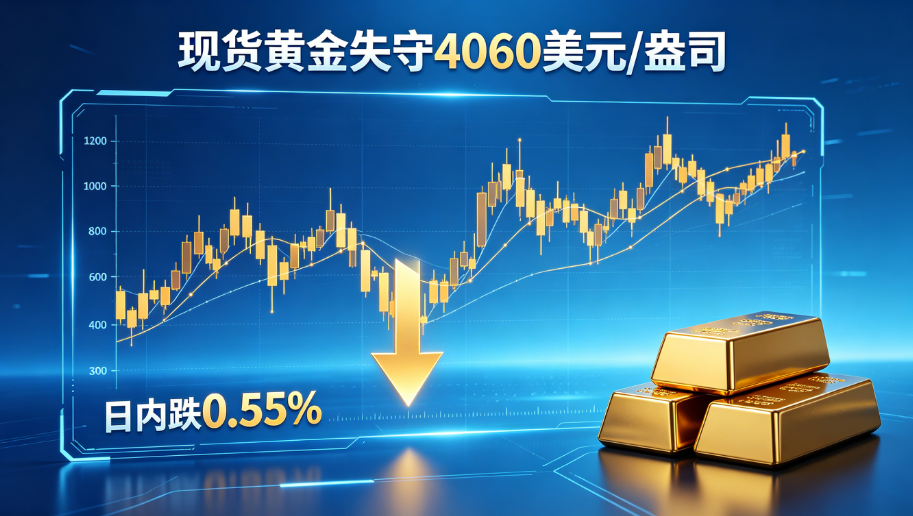
The international gold market has seen a notable decline. Today, spot gold price lost the key $4,060/oz level, with an intraday drop of 0.55%, drawing widespread market attention. As the world's most representative safe-haven asset, gold price fluctuations often reflect investors' comprehensive expectations for the macroeconomic outlook, geopolitical situation, and monetary policy direction. Falling below $4,060 is not only a critical technical breach but may also signal a deep shift in market sentiment and capital flows.
Main Body
1. Macroeconomic Environment Weighs on Gold
Recently, U.S. economic data continues to show resilience, the labor market remains solid, and core inflation is not slowing as fast as expected, pushing market expectations for the Fed's rate cut timeline further back. Expectations of interest rates staying high or even longer directly undermine the appeal of holding non-yielding gold. When real dollar interest rates rise, the opportunity cost of gold increases, causing some safe-haven capital to shift to dollar cash or high-yield bonds, thereby suppressing gold prices.
At the same time, the U.S. Dollar Index has strengthened over the past few days, regaining key resistance levels, directly pressuring dollar-denominated gold. The combination of these two factors has weakened gold's support in the absence of significant positive news, ultimately causing it to lose the $4,060 level.
2. Geopolitical Risk Premium Gradually Fading
Since early 2024, some geopolitical hotspots have shown signs of easing, with market safe-haven sentiment cooling compared to previous months. For example, although the situation in the Middle East remains tense, progress in negotiations between the two sides has led to some retreat in risk premiums for oil and gold. Additionally, while election uncertainties across major economies persist, the market has gradually priced them in. Against a backdrop of marginal weakening in safe-haven demand, the buying momentum for gold as a 'safe harbor' naturally struggles to remain strong.
3. Technical Breakout Triggers Short-Term Selling Pressure
From a technical analysis perspective, $4,060 was a critical level fiercely contested by bulls and bears recently. Gold has oscillated around this range multiple times over the past two weeks, indicating a buildup of stop-loss and profit-taking orders. Breaking below this level today triggered sell orders from some algorithmic trading, amplifying the decline. In the short term, support in the $4,050 to $4,030 range will be tested; if it fails to stabilize, the next important support could be the $4,000 psychological level.
However, it should be noted that technical breakouts often come with emotional overreaction. If subsequent macro data does not bring unexpected negatives, gold may have potential for a technical rebound, and investors should avoid excessive short-selling.
4. Implications for Investors and Strategic Thinking
The current gold market is at a fragile balance point with interwoven bullish and bearish factors. On one hand, the global central bank gold buying trend has not reversed, with emerging market central banks continuing to increase gold reserves, providing long-term bottom support for gold prices; on the other hand, the uncertainty of Fed rate policy and dollar strength continue to pressure gold in the short term.
For asset allocation, investors should focus on the following:
- Diversify Risk: No need to rush to liquidate due to a single-day decline; gold remains an effective hedge against inflation and geopolitical risks.
- Watch Data: Upcoming U.S. CPI data and Fed officials' speeches this week will directly influence short-term gold price direction.
- Stay Flexible: If gold finds effective support around $4,050 with increased volume, it could be a tentative entry opportunity; conversely, if it breaks below $4,000, strictly control position risk.
Conclusion
Spot gold losing the $4,060 level is the result of combined macro interest rate environment, dollar strength, cooling safe-haven sentiment, and technical breakout. In the short term, the market may enter a phase of oscillation and bottom-seeking, but in the medium to long term, gold's strategic allocation value has not disappeared. Investors should face volatility with a rational mindset, closely track global economic and policy developments, and make prudent judgments between risks and opportunities. Whether this gold price correction is the beginning of a trend reversal or a 'squat' before a bullish charge? The answer may gradually emerge in the market performance over the coming weeks.