


U.S. Stock AI Leader: The Market Logic Behind NVIDIA's Strong Rebound
Introduction
In June 2026, the U.S. stock market experienced a strong rebound driven by artificial intelligence (AI) concept stocks after a turbulent first half. Among them, AI chip leader NVIDIA, after a previous sharp pullback, recently showed remarkable resilience, with a weekly gain of over 15%, reigniting market confidence in tech stocks. This article will analyze the deep reasons behind NVIDIA's rebound from three dimensions: macroeconomic environment, industry trends, and corporate fundamentals, and explore the overall direction of U.S. stocks.
Macroeconomic Environment: Interest Rate Expectations Shift
In recent months, the Federal Reserve's hawkish stance had been suppressing growth stock valuations. However, with the latest CPI and employment data showing continued cooling of inflation, the market began pricing in a Fed rate cut in the second half of the year. Interest rate futures imply a 70% probability of a 25-basis-point cut in September. This shift in expectations directly caused capital to flow back from defensive sectors to high-growth areas like AI and semiconductors. As the core supplier of AI computing power, NVIDIA has the greatest valuation elasticity and naturally benefits first. Additionally, the U.S. Dollar Index retreated from highs, easing currency headwinds for tech giants with large overseas revenues.
AI Industry Trend: Computing Power Demand Explosion
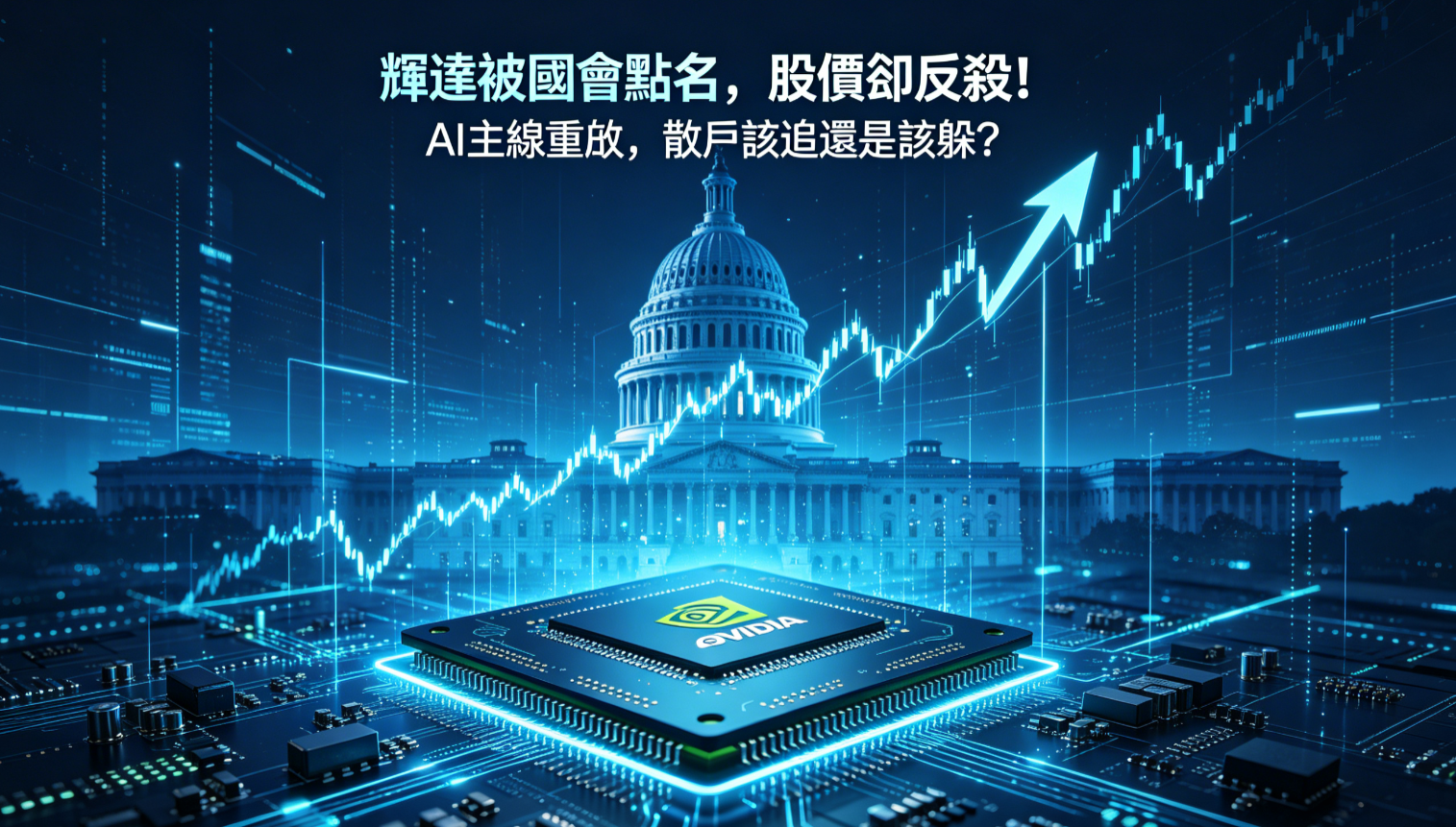
Figure: NVIDIA recent stock price trend and AI computing power specification advancement diagram
From an industry perspective, AI development has moved from the 'training phase' to the 'inference phase,' with demand for computing power from large language models, autonomous driving, and generative video applications growing exponentially. NVIDIA's Blackwell architecture GPU and NVLink interconnect technology hold nearly 90% market share in the hyperscale data center market. Several cloud service providers (e.g., Microsoft, Amazon, Google) recently announced significant increases in their 2026 capital expenditures by 30%-40%, all allocated to AI infrastructure construction. This means NVIDIA has very high order visibility for the coming quarters, with shipment forecasts for H100 and successor products being continuously revised upward.
More importantly, NVIDIA recently signed long-term autonomous driving chip contracts with several automakers, extending AI applications from the cloud to edge computing. This not only diversifies revenue sources but also provides a new growth anchor for valuation. Analysts generally believe that the market's previous pessimistic pricing of NVIDIA (e.g., China export controls, competitor AMD catching up) has been overdone, and the current rebound is a reasonable valuation repair.
Corporate Fundamentals: Earnings Support
Turning to financial data, NVIDIA's latest quarterly revenue reached $35 billion, still maintaining year-over-year growth above 200%, with gross margin exceeding 76%, both significantly beating market expectations. Management emphasized in the earnings call that the data center business will continue to benefit from NVIDIA's expanding presence, and enterprise AI applications (e.g., digital twins, medical imaging) are beginning to ramp up. Free cash flow also hit a record high, indicating continued operational efficiency improvements.
Notably, NVIDIA's P/E ratio has corrected from a peak of 70x to about 45x, and given its undisputed leadership in the AI field, this valuation level is attractive. Several Wall Street investment banks have recently raised their target prices and listed it as a core holding for the second half of the year. Additionally, NVIDIA announced an expansion of its share buyback program, further strengthening market confidence.
Conclusion and Outlook
In summary, NVIDIA's strong rebound is not a flash in the pan of capital speculation but is based on solid revenue growth, structural industry demand, and improving macro interest rate environment. For U.S. stocks overall, the AI sector's leadership is significant—not only does it provide a clear market theme, but it also drives collective strength in related sectors such as semiconductors, cloud computing, and robotics.
Looking ahead to the second half of the year, investors still need to watch the actual pace of Fed rate cuts, geopolitical risks (especially U.S.-China tech competition), and whether NVIDIA's quarterly shipment data can continue to impress. But for the medium to long term, the AI revolution has just begun, and as the core engine, NVIDIA's stock rebound can be seen as the start of a new bull cycle. For investors seeking to participate in AI's long-term growth, the current level may be a worthwhile entry opportunity.
Keywords: U.S. Stocks, NVIDIA, AI, Stock Rebound, Semiconductors, Rate Expectations, Tech Stocks